

We have some exciting news to share! The Motley Fool UK has now become The Twelfth Magpie -- an independent, UK-owned company, led by our long-serving UK management team — Mark Rogers, Chris Nials and Heather Adlington. In practical terms, it’s the same team you know, now fully focused on serving our UK readers and members.

Just as importantly, our approach remains unchanged: long-term, jargon-free, and on your side. This site is our new home, and there will be extra tweaks made across the coming few days as we settle in. So if anything looks a little off, please bear with us!

The content of this article was relevant at the time of publishing. Circumstances change continuously and caution should therefore be exercised when relying upon any content contained within this article.

3 ways I look to reduce investment risk

These are three easy ways to try and reduce investment risk when investing in UK companies. They’re vital because losing money can really hold back returns.

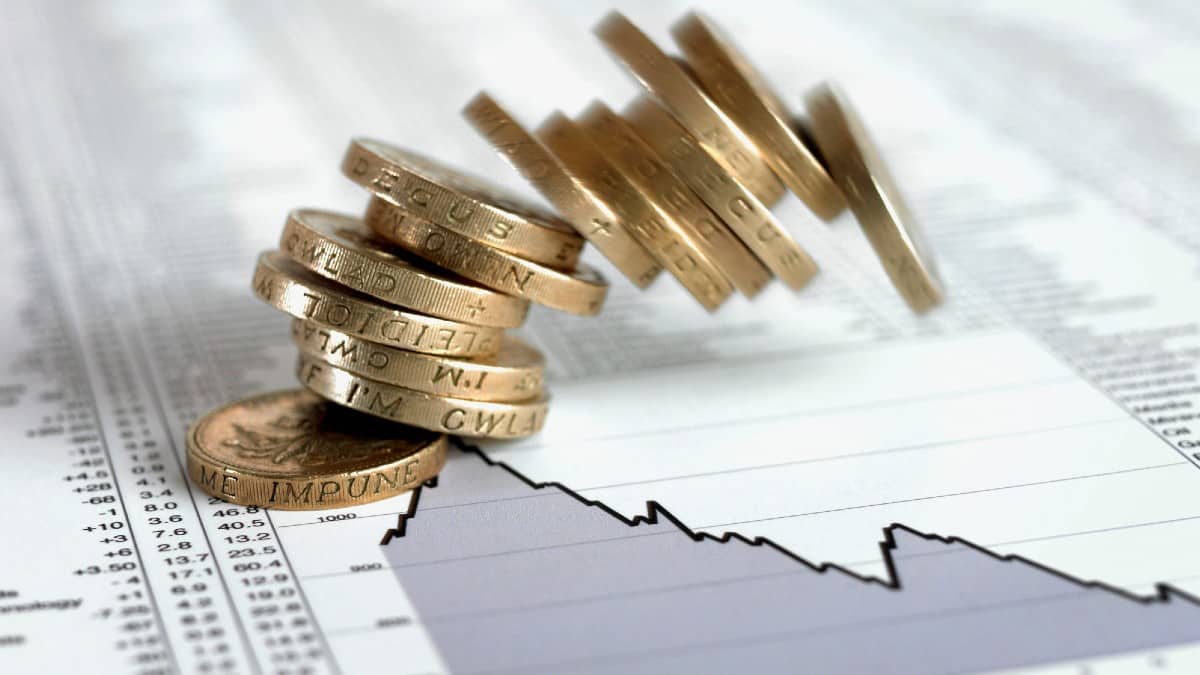
Stack of British pound coins falling on list of share prices

Image source: Getty Images

You’re reading a free article with opinions that may differ from The Motley Fool’s Premium Investing Services. Become a Motley Fool member today to get instant access to our top analyst recommendations, in-depth research, investing resources, and more. Learn More.

One of Warren Buffett’s famous sayings is “never lose money”. That’s because losses can seriously hit investment returns so it’s just as important, in my view, to reduce investment risk as it is to find shares capable of huge growth, or paying a high and sustainable dividend. So I want to avoid high-risk share prices. 

There are many ways to avoid riskier shares, none of them completely foolproof. But over a decade of investing I’ve never held a company that has gone bust. Then again, that’s not to say it could never happen. Anyway, here are three easy ways I try to avoid the riskiest, wealth-destroying shares.

XXX

Look at the balance sheet

Although the profit and loss account is more exciting, the balance sheet is useful for analysing the strength of a company’s finances at a certain point in time. It has its drawbacks as most financial documents do, but it can also help investors.

One way to use the balance sheet to avoid the most high-risk shares is to calculate the current ratio. I’d be ideally looking for a figure that’s above two (with this ratio, generally speaking, the higher the better).

This ratio shows me if the company can easily pay its short term debts. It can provide a warning sign a company may be in distress if the figure is well below one.

The ratio is calculated by dividing current assets by current liabilities. 

To provide a tougher test also do the quick ratio, which is similar to the current ratio and is also a balance sheet strength test.

Look at the margins

I aim to invest in businesses that either have high margins, or margins that are improving. Why? Because high margins insulate a firm when conditions get tough or prices drop.

Imagine a company making 1% margin on sales. A major supplier then increases their bills by 5%. If this increased cost can’t be passed on to the customer, perhaps because the industry is competitive and customers are price-sensitive, then very quickly the company is trading at a loss.

A higher starting margin would have made absorbing this increased cost much more straightforward and the company would have remained profitable, all else being equal.

High margins can be a sign of less competition or an ingrained competitive advantage. Some industries with low cost bases also just lend themselves to higher margins so I compare an investment to how it’s competitors are doing.

Reducing investment risk

Thirdly, I look at the quality and holdings of management. If they have ‘skin in the game’, it’s more likely their interests are aligned with those of shareholders. Also, an experienced board with independent executives and relatively little board rotation are good signs. At the opposite end of the scale, large director sales can be seen as a potential red flag.

Three measures alone can’t eliminate risk, of course. I’d add more research on top of this. For me though, it serves as a starting point in a bid to not invest in stocks that could seriously hamper my portfolio’s returns.


Andy Ross owns no share mentioned. The Motley Fool UK has no position in any of the shares mentioned. Views expressed on the companies mentioned in this article are those of the writer and therefore may differ from the official recommendations we make in our subscription services such as Share Advisor, Hidden Winners and Pro. Here at The Motley Fool we believe that considering a diverse range of insights makes us better investors.

More on Investing Articles

Friends and sisters exploring the outdoors together in Cornwall. They are standing with their arms around each other at the coast.
Investing Articles

£503 buys 14 shares in this FTSE 250 stock that returned 23.9% annually for the last 15 years

This FTSE 250 stock has averaged a huge return for 15 years. At today's price, £503 buys 14 shares. But…

Read more »

Black woman using loudspeaker to be heard
Investing Articles

£1,000 buys 25 shares in this FTSE 100 stock that’s returned 29.2% annually for the last 10 years

This FTSE 100 mining stock has returned close to 30% a year for a decade. At 3,995p, £1,000 buys 25…

Read more »

Female student sitting at the steps and using laptop
Investing Articles

Down 47%, is this growth stock finally worth buying in May?

With a £288m order book and a hidden pipeline of defence and nuclear contracts, is this growth stock now too…

Read more »

House models and one with REIT - standing for real estate investment trust - written on it.
Investing Articles

2 REITs yielding 7%+ to consider for passive income in 2026

A REIT backed by the NHS and another backed by Tesco and Sainsbury's with both yielding 7%+. Here's why I'm…

Read more »

Woman riding her old fashioned bicycle along the Beach Esplanade at Aberdeen, Scotland.
Investing Articles

Just 97 shares of this UK dividend stock generate £238 in passive income

A 5.7% yield, £238 in passive income from just 97 shares, and one of the most divisive dividend stocks on…

Read more »

ISA coins
Investing Articles

£10,000 in an ISA generates a second income of…

The London Stock Exchange is home to some of the world's most generous dividends. But how big a second income…

Read more »

Shot of a senior man drinking coffee and looking thoughtfully out of a window
Investing Articles

Expert recommendations: 2 top income stocks yielding 7%+!

With yields of 7.2% and 7.8% respectively, these two income stocks are catching the eyes of institutional analysts. Should investors…

Read more »

Illustration of flames over a black background
Investing Articles

3 top income-focused stocks to buy in May 2026, according to experts

Looking for a stock to buy for income in May 2026? Experts have flagged these three UK dividend shares as…

Read more »





