


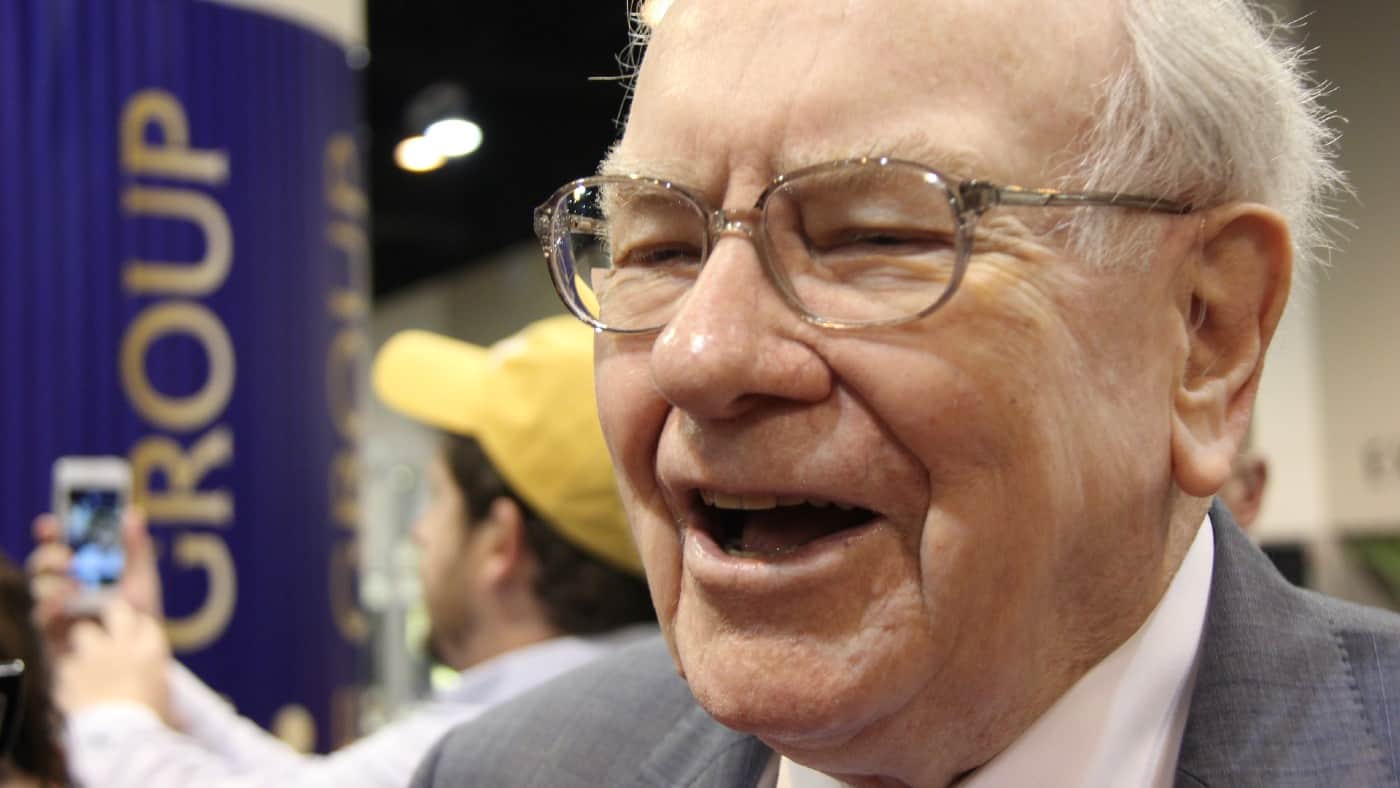
Famous investor Warren Buffett has never retired. But I think applying some straightforward lessons from Buffett can help me bring my own retirement forward by investing more successfully. Here is how.
1. Making a few great choices
A lot of people reckon that activity is the key to successful investing. Instead of owning the same shares for decades, they believe they can make more money by selling shares a few months after they buy them and investing the proceeds in other companies.
So why does Warren Buffett buy companies and hold them for years or even decades?
In short, it is because he is not a speculator trying to profit from short-term share price movements, but an investor looking for companies he thinks can grow their profits for many years to come. Buffett’s reasoning is that if he buys a company with a business set to grow, he can benefit from the profits it makes each year and pays out as dividends or invests in the business. Hopefully he can also see its share price rise as the business grows.
Buffett reckons that most investors see few great opportunities in their lifetimes – but they do see some. So his approach is to invest in only a few companies, but to invest a big enough sum that a positive result could make a meaningful difference to his portfolio overall. One way of thinking about this that Buffett shares is to imagine that one can only make 20 investment choices across a whole lifetime. Assessing each investment choice against that measure, an investor like me is far less likely to buy shares just because they look a bit cheap at the moment. Instead, I would spend my time hunting for companies I felt had the potential to provide strong returns over a very long timeframe.
The difference between a share that does quite well and a share that does very well can be noticeable even in a year or two. But over the course of decades, the impact on investment return can be huge. This can be seen in the track record of Buffett’s own company, Berkshire Hathaway. Between 1964 and last year, Berkshire’s compounded annual gain in price per share was 20.1%. The equivalent gain in the S&P Index (with dividends reinvested) was 10.5% per year.
Over one year, that might not sound like a big difference. But over the 57 years in question, the S&P grew 30,209%. That is enormous – but nothing like what Buffett achieved. By focusing on a few, compelling investments, the per share market value of Berkshire grew by 3,641,613%. The S&P growth was superb – but less than 1% of the growth Buffett achieved!
2. Risk management front and centre
Warren Buffett has two rules he offers to investors. Rule number one is “don’t lose money”. Rule number two is “don’t forget rule number one”.
That might not sound like very actionable advice. After all, what sort of investor plans to lose money? But actually the saying contains what I see as a very valuable truth many investors miss. That insight is that reducing the downside from one’s investments can make a much bigger difference to one’s retirement pot than trying to maximise the upside.
Concerns about having enough money for retirement can sometimes drive people into taking more risky decisions when it comes to investment. But I prefer potentially less lucrative investments that have a lower risk profile.
That is because, as Buffett realises, if an investor loses money then it can be hard to make up for it.
A simple illustration of that is what happens if a share halves in value. To get back to what I paid for it, I need it to double. So a 50% loss requires a 100% gain to get back to where it started. It really can be easier to lose money than to make it. So at a practical level, I do not just think about risks as a final checkpoint when deciding to buy a share for my retirement plan. Instead, thinking about possible risks is a key part of how I value a company and its prospects.
3. Warren Buffett stays the course
Buffett has said that if the stock market closed for years at a time, it would not bother him.
That is because he is not actively trading shares. Instead, he is buying stakes in companies he plans to hold for a long time. That is a big difference in mindset – and it can lead to a big difference in results.
When the market falls steeply, many investors understandably feel nervous. That can lead them to dump shares at a loss, in case they fall further. But that is the behaviour of a speculator, not an investor like Buffett.
When Buffett buys a share, he is purchasing a stake in a business he hopes will do well for a very long time. Part of the nature of investing with such a timeframe is that, sooner or later, almost every company runs into trouble that can hurt its share price. That could be something specific to the company like the accounting fraud that happened years ago when Buffett owned Tesco shares, or part of a more general market downturn. But what Buffett does not do is sell a share just because its price has plummeted.
Instead, he goes back to his fundamental investment case for the business. If the share price fall reflects a significant change in that, he may sell it. That is why he sold airline shares in 2020. But if he continues to believe in the investment case, he just ignores the share price fall and hopes that in future the stock market will revalue the business at a higher level.
Simply cutting out a few cases of selling good shares at a loss, only to see them rebound later, could help me improve the investment returns in my retirement plan. That could hopefully help me hit my goals sooner – and retire earlier.







