


We have some exciting news to share! The Motley Fool UK has now become The Twelfth Magpie -- an independent, UK-owned company, led by our long-serving UK management team — Mark Rogers, Chris Nials and Heather Adlington. In practical terms, it’s the same team you know, now fully focused on serving our UK readers and members.

Just as importantly, our approach remains unchanged: long-term, jargon-free, and on your side. This site is our new home, and there will be extra tweaks made across the coming few days as we settle in. So if anything looks a little off, please bear with us!

The content of this article was relevant at the time of publishing. Circumstances change continuously and caution should therefore be exercised when relying upon any content contained within this article.

Should I invest in the FTSE 100 or S&P 500 in 2023?

Index funds are a great way to grow my savings. But which of the many funds among the FTSE 100 and S&P 500 would I like to invest in?

Index Funds text carved in stone background

Image source: Getty Images

You’re reading a free article with opinions that may differ from The Motley Fool’s Premium Investing Services. Become a Motley Fool member today to get instant access to our top analyst recommendations, in-depth research, investing resources, and more. Learn More.

Warren Buffett is a huge proponent of index funds. He labels them “the most sensible equity investment” for most people, and has advocated for investing in the S&P 500. That being said, the UK’s FTSE 100 is a great option too. So, here’s where I decide which index I’ll be looking to invest in next year.

FTSE 100

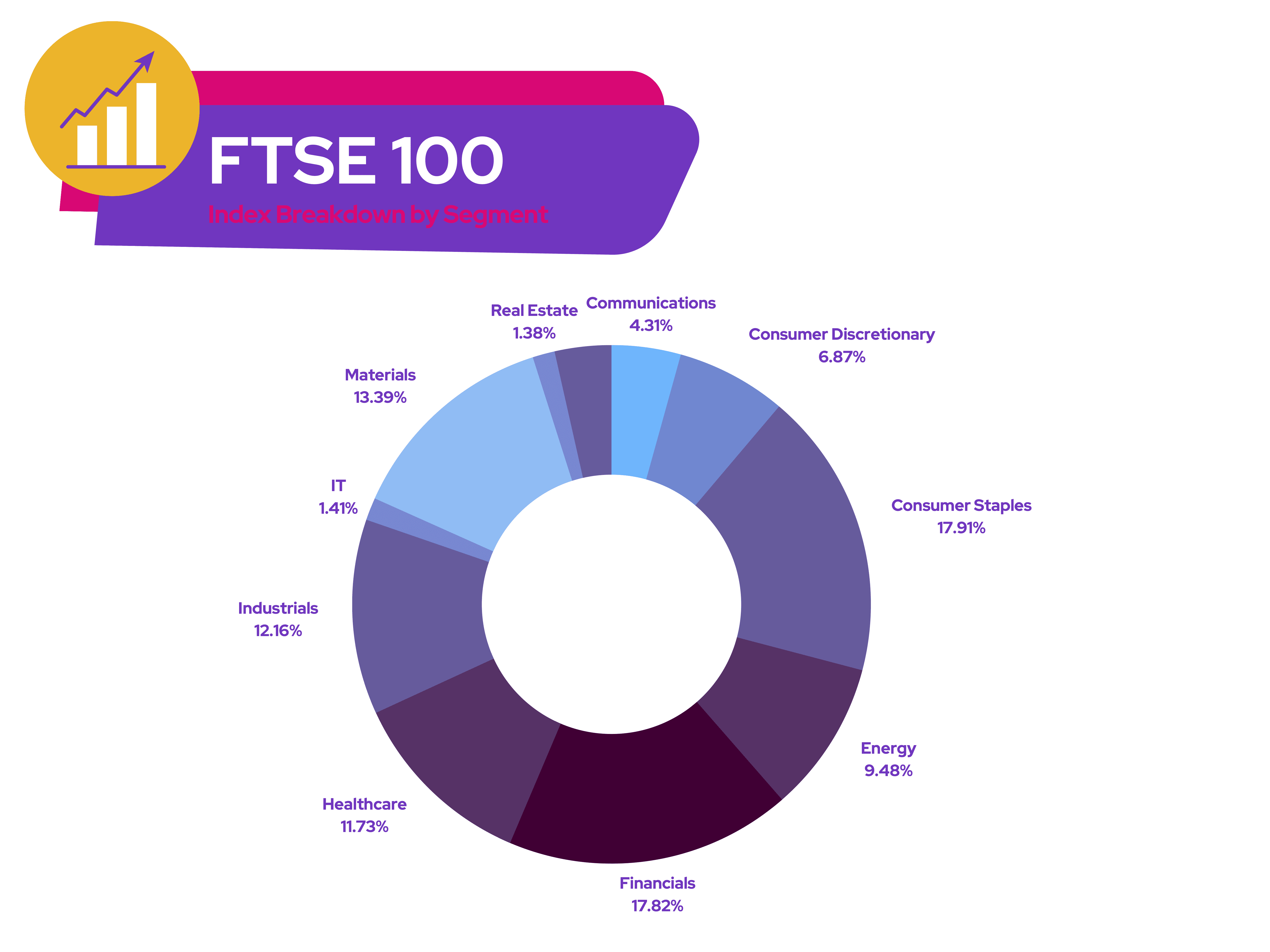
Britain’s main index has been fairly static this year, despite the headwinds of high inflation and interest rates. This is due to the more defensive nature of its shares. Hence, companies in sectors such as consumer staples, oil and financials have seen their share prices holding up amid a looming global recession.
XXX
FTSE 100 - Index Breakdown by Segment.
Data source: Global Investment Strategy

Nonetheless, a global recession could present a buying opportunity for me. This is because most of the index’s companies are cyclical in nature. For instance, firms in the mining industry will fall during an economic downturn, but will rebound when the global economy recovers.

However, the defensive set up of the FTSE 100 is a double-edged sword. The index’s lack of tech and growth stocks has resulted in very slow growth over the past two decades. Despite that, the UK’s largest index is known for being a dividend mine with its average dividend yield of 3.7%. This attracts many dividend investors seeking passive income.

S&P 500

On the flip side, the S&P 500 has spent a large part of the year in bear market territory. This is a result of its larger exposure to tech and growth stocks. And unlike its British counterpart, most its earnings come domestically. Although international income this year has affected earnings negatively due to a strong US dollar.
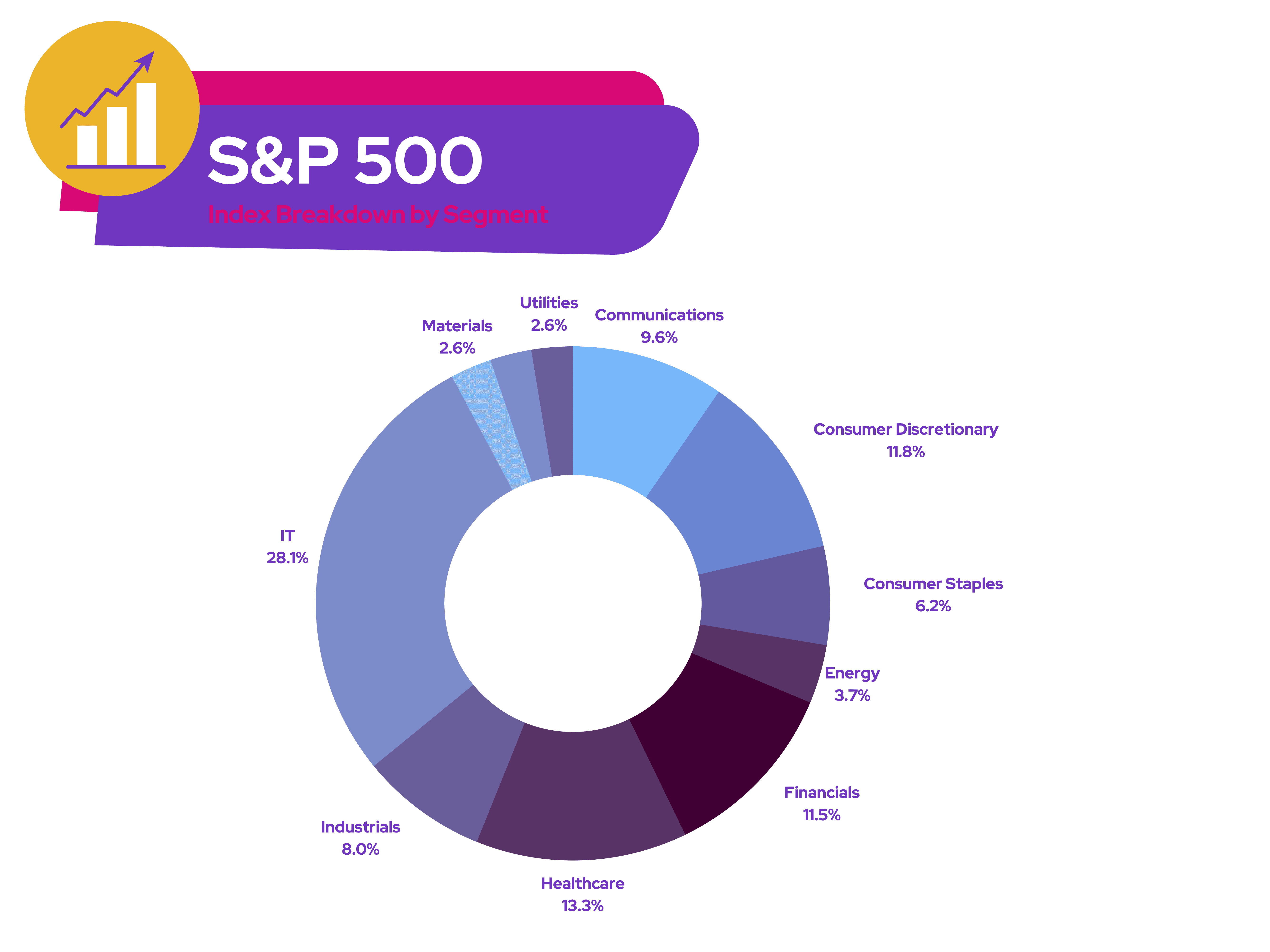
S&P 500 - Index Breakdown by Segment
Data source: Global Investment Strategy

Nevertheless, several analysts believe the US index may have hit a bottom. Historically, the S&P has a tendency to find a bottom before a recession and when earnings estimates decline.
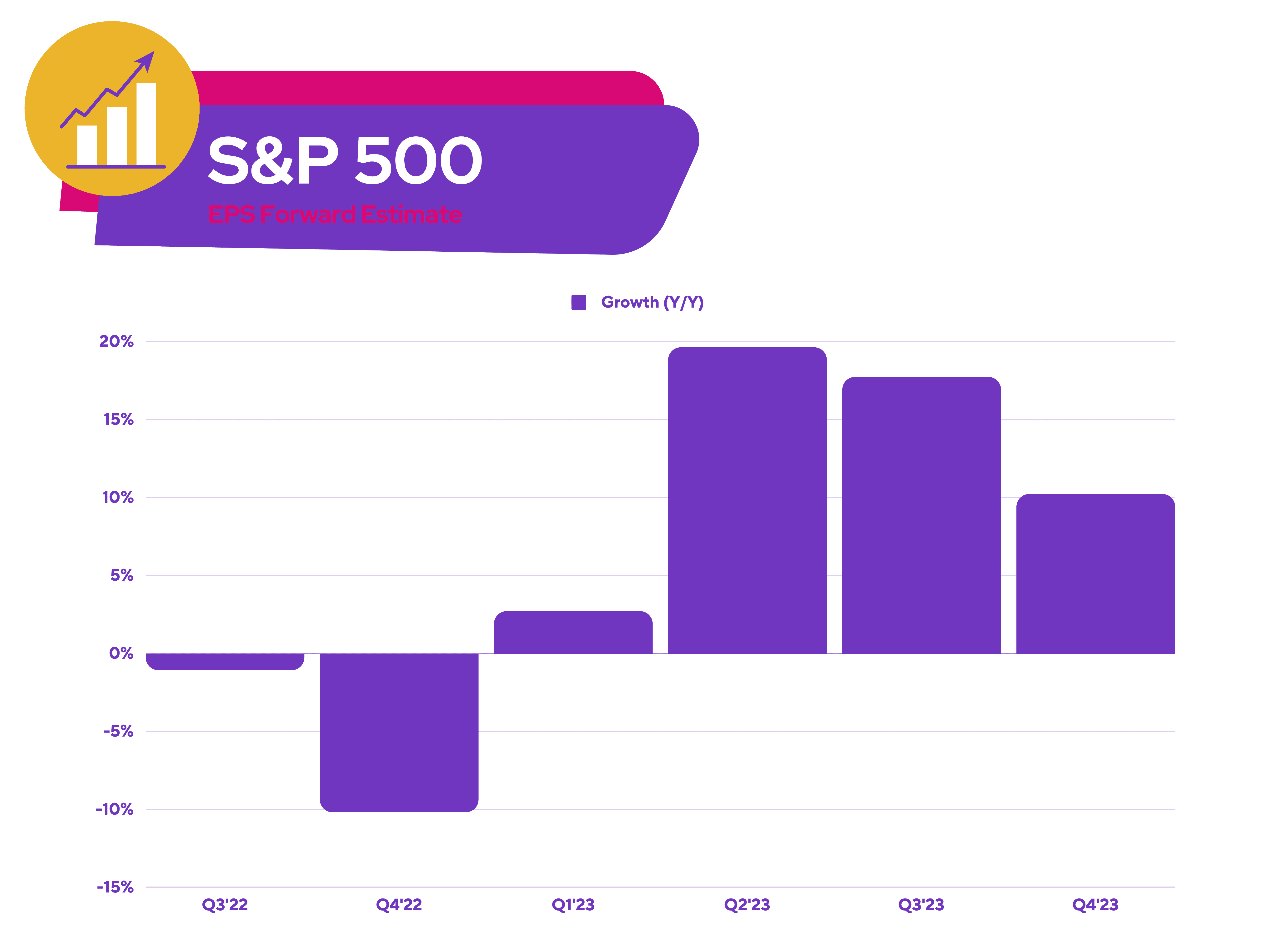
S&P 500 - EPS Forward Estimate
Data source: S&P

Additionally, inflation seems to have peaked. The last four Consumer Price Index (CPI) releases have seen declines. Moreover, the latest comments from Federal Reserve members indicate that they may be slowing the pace of rate hikes sooner rather than later. This has led many analysts to assume that rate hikes could stop at a lower rate than previously anticipated.

If this proves to be true, it could see the S&P 500 generating a higher return than the FTSE 100 in the upcoming year. Bullish analysts such as Barry Bannister from Stifel are now forecasting the US index to rise by as much as 17% in the first quarter of 2023.

Which will I buy?

In a pool of index funds, it’s important to pay for one that charges minimal management fees so that I can capitalise on as much gains as possible. These include popular Exchange Traded Funds (ETFs), such as Vanguard’s S&P 500 ETF and FTSE 100 ETF.

Ultimately though, I’m planning to buy both FTSE 100 and S&P 500 ETFs, because I believe in diversifying my portfolio. This allows me to gain exposure to both growth and blue-chip names while capitalising on reasonable dividend yields. Nevertheless, most of my money will still be invested in individual value and growth stocks such as Alphabet and PayPal, as I’m inclined to take more risk for higher growth.


Suzanne Frey, an executive at Alphabet, is a member of The Motley Fool’s board of directors. John Choong has positions in Alphabet (A shares) and PayPal Holdings. The Motley Fool UK has recommended Alphabet (A shares), Alphabet (C shares), and PayPal Holdings. Views expressed on the companies mentioned in this article are those of the writer and therefore may differ from the official recommendations we make in our subscription services such as Share Advisor, Hidden Winners and Pro. Here at The Motley Fool we believe that considering a diverse range of insights makes us better investors.

More on Investing Articles

Friends and sisters exploring the outdoors together in Cornwall. They are standing with their arms around each other at the coast.
Investing Articles

£503 buys 14 shares in this FTSE 250 stock that returned 23.9% annually for the last 15 years

This FTSE 250 stock has averaged a huge return for 15 years. At today's price, £503 buys 14 shares. But…

Read more »

Black woman using loudspeaker to be heard
Investing Articles

£1,000 buys 25 shares in this FTSE 100 stock that’s returned 29.2% annually for the last 10 years

This FTSE 100 mining stock has returned close to 30% a year for a decade. At 3,995p, £1,000 buys 25…

Read more »

Female student sitting at the steps and using laptop
Investing Articles

Down 47%, is this growth stock finally worth buying in May?

With a £288m order book and a hidden pipeline of defence and nuclear contracts, is this growth stock now too…

Read more »

House models and one with REIT - standing for real estate investment trust - written on it.
Investing Articles

2 REITs yielding 7%+ to consider for passive income in 2026

A REIT backed by the NHS and another backed by Tesco and Sainsbury's with both yielding 7%+. Here's why I'm…

Read more »

Woman riding her old fashioned bicycle along the Beach Esplanade at Aberdeen, Scotland.
Investing Articles

Just 97 shares of this UK dividend stock generate £238 in passive income

A 5.7% yield, £238 in passive income from just 97 shares, and one of the most divisive dividend stocks on…

Read more »

ISA coins
Investing Articles

£10,000 in an ISA generates a second income of…

The London Stock Exchange is home to some of the world's most generous dividends. But how big a second income…

Read more »

Shot of a senior man drinking coffee and looking thoughtfully out of a window
Investing Articles

Expert recommendations: 2 top income stocks yielding 7%+!

With yields of 7.2% and 7.8% respectively, these two income stocks are catching the eyes of institutional analysts. Should investors…

Read more »

Illustration of flames over a black background
Investing Articles

3 top income-focused stocks to buy in May 2026, according to experts

Looking for a stock to buy for income in May 2026? Experts have flagged these three UK dividend shares as…

Read more »





