

We have some exciting news to share! The Motley Fool UK has now become The Twelfth Magpie -- an independent, UK-owned company, led by our long-serving UK management team — Mark Rogers, Chris Nials and Heather Adlington. In practical terms, it’s the same team you know, now fully focused on serving our UK readers and members.

Just as importantly, our approach remains unchanged: long-term, jargon-free, and on your side. This site is our new home, and there will be extra tweaks made across the coming few days as we settle in. So if anything looks a little off, please bear with us!

The content of this article was relevant at the time of publishing. Circumstances change continuously and caution should therefore be exercised when relying upon any content contained within this article.

This British oil giant just dropped to third place on the FTSE 100

Shell just lost its spot in second place on the FTSE 100 after its market cap was overtaken by HSBC. What’s next for the oil giant?

| More on:
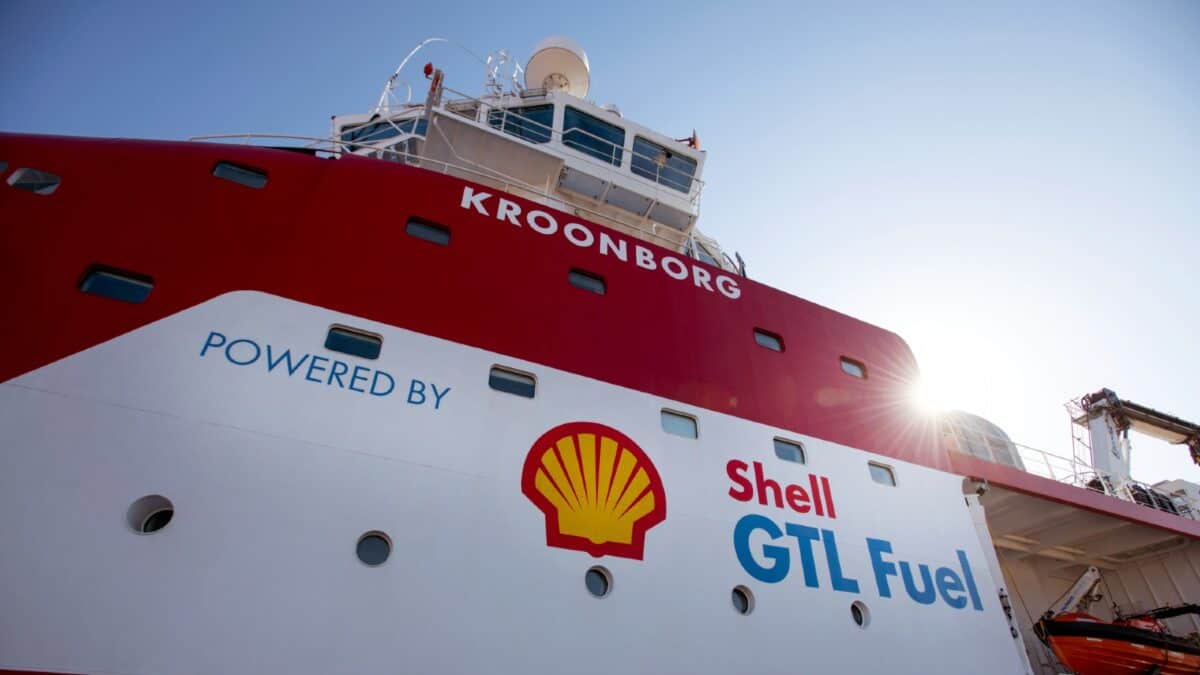
Side of boat fuelled by gas to liquids, advertising Shell GTL Fuel

Image source: Olaf Kraak via Shell plc

You’re reading a free article with opinions that may differ from The Motley Fool’s Premium Investing Services. Become a Motley Fool member today to get instant access to our top analyst recommendations, in-depth research, investing resources, and more. Learn More.

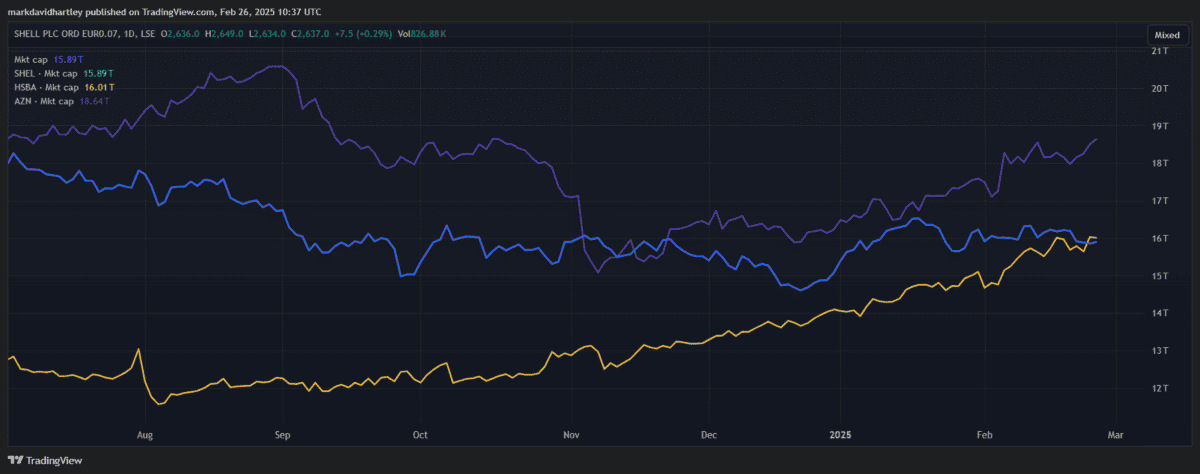
For years, Shell (LSE: SHEL) has been one of the largest and most influential energy stocks on the FTSE 100. But in a surprising turn, the leading UK oil stock has slipped to third place in the index, overtaken by HSBC in terms of market capitalisation.

Since August last year, it’s doubled from £80bn to £160bn, while Shell’s market cap has dropped from £175bn to below £160bn.
XXX
FTSE 100 market caps
Created on TradingView.com

So, what’s behind this shift and should investors be concerned about Shell’s future? 

Let’s take a closer look at the key factors driving its share price, from global oil prices to the company’s latest strategic moves.

Why did Shell drop?

Shell’s fall in the rankings has far more to do with HSBC’s growth than its own weaknesses. But why hasn’t Shell’s market cap grown in a rising Footsie too? Could there be underlying issues worth examining?

For example, falling crude oil prices could be affecting revenue and earnings expectations. Shell’s profitability is directly tied to crude oil prices. When oil prices are high, the company enjoys soaring revenues, but when they fall, profits can take a hit.

Recently, Brent crude has hovered between $75 to $85 a barrel, down from highs above $100 in 2022.

OPEC+ production cuts have attempted to stabilise prices while demand concerns in China have weighed on market sentiment.

There are many reasons why Shell remains a good stock to consider but first, let’s look at the risks.

An industry in flux

Unlike some sectors, energy stocks are highly cyclical and susceptible to global market swings. This adds a degree of volatility to stocks that are dependent on oil prices. If the world economy weakens, energy consumption could decline, further pressuring Shell’s revenue and profit margins.

In recent years, this problem has been compounded by a growing desire to shift away from fossil fuel consumption. Governments worldwide are tightening climate policies, leading to higher costs and reduced demand for fossil fuels. 

A full transition to renewable energy, while necessary, is proving to be costly and drawn out. This has become a key risk affecting its bottom line.

Prioritising profits

Shell may be suffering short-term losses but it remains a solid stock with a history of strong shareholder returns. With a dividend yield of around 4% and a dedicated share buyback programme, it offers good value for investors.

Despite oil price fluctuations, its diverse operations in refining, chemicals and renewables help maintain a steady cash flow. 

But to continue turning a profit, it may need to rebalance its priorities.

While some renewable energy and carbon capture efforts remain, there’s been a notable weakening of emission reduction targets.

The high costs of these efforts threaten shareholder returns, pressuring it to prioritise fossil fuel profits over climate needs. While this could help revitalise short-term growth, it comes at a high cost for the environment.

Hopefully, a more beneficial long-term solution can be achieved. 

For those bullish on oil prices rebounding, Shell may be a stock to consider. But for investors worried about long-term energy transition risks, it may be worth considering more diversified FTSE 100 stocks.


Mark Hartley has positions in HSBC Holdings. The Motley Fool UK has recommended HSBC Holdings. Views expressed on the companies mentioned in this article are those of the writer and therefore may differ from the official recommendations we make in our subscription services such as Share Advisor, Hidden Winners and Pro. Here at The Motley Fool we believe that considering a diverse range of insights makes us better investors.

More on Investing Articles

Friends and sisters exploring the outdoors together in Cornwall. They are standing with their arms around each other at the coast.
Investing Articles

£503 buys 14 shares in this FTSE 250 stock that returned 23.9% annually for the last 15 years

This FTSE 250 stock has averaged a huge return for 15 years. At today's price, £503 buys 14 shares. But…

Read more »

Black woman using loudspeaker to be heard
Investing Articles

£1,000 buys 25 shares in this FTSE 100 stock that’s returned 29.2% annually for the last 10 years

This FTSE 100 mining stock has returned close to 30% a year for a decade. At 3,995p, £1,000 buys 25…

Read more »

Female student sitting at the steps and using laptop
Investing Articles

Down 47%, is this growth stock finally worth buying in May?

With a £288m order book and a hidden pipeline of defence and nuclear contracts, is this growth stock now too…

Read more »

House models and one with REIT - standing for real estate investment trust - written on it.
Investing Articles

2 REITs yielding 7%+ to consider for passive income in 2026

A REIT backed by the NHS and another backed by Tesco and Sainsbury's with both yielding 7%+. Here's why I'm…

Read more »

Woman riding her old fashioned bicycle along the Beach Esplanade at Aberdeen, Scotland.
Investing Articles

Just 97 shares of this UK dividend stock generate £238 in passive income

A 5.7% yield, £238 in passive income from just 97 shares, and one of the most divisive dividend stocks on…

Read more »

ISA coins
Investing Articles

£10,000 in an ISA generates a second income of…

The London Stock Exchange is home to some of the world's most generous dividends. But how big a second income…

Read more »

Shot of a senior man drinking coffee and looking thoughtfully out of a window
Investing Articles

Expert recommendations: 2 top income stocks yielding 7%+!

With yields of 7.2% and 7.8% respectively, these two income stocks are catching the eyes of institutional analysts. Should investors…

Read more »

Illustration of flames over a black background
Investing Articles

3 top income-focused stocks to buy in May 2026, according to experts

Looking for a stock to buy for income in May 2026? Experts have flagged these three UK dividend shares as…

Read more »





