

We have some exciting news to share! The Motley Fool UK has now become The Twelfth Magpie -- an independent, UK-owned company, led by our long-serving UK management team — Mark Rogers, Chris Nials and Heather Adlington. In practical terms, it’s the same team you know, now fully focused on serving our UK readers and members.

Just as importantly, our approach remains unchanged: long-term, jargon-free, and on your side. This site is our new home, and there will be extra tweaks made across the coming few days as we settle in. So if anything looks a little off, please bear with us!

The content of this article was relevant at the time of publishing. Circumstances change continuously and caution should therefore be exercised when relying upon any content contained within this article.

3 things to watch when buying a penny share

Our writer shares a trio of the factors he carefully considers when hunting for possible penny shares to buy for his portfolio.

| More on:
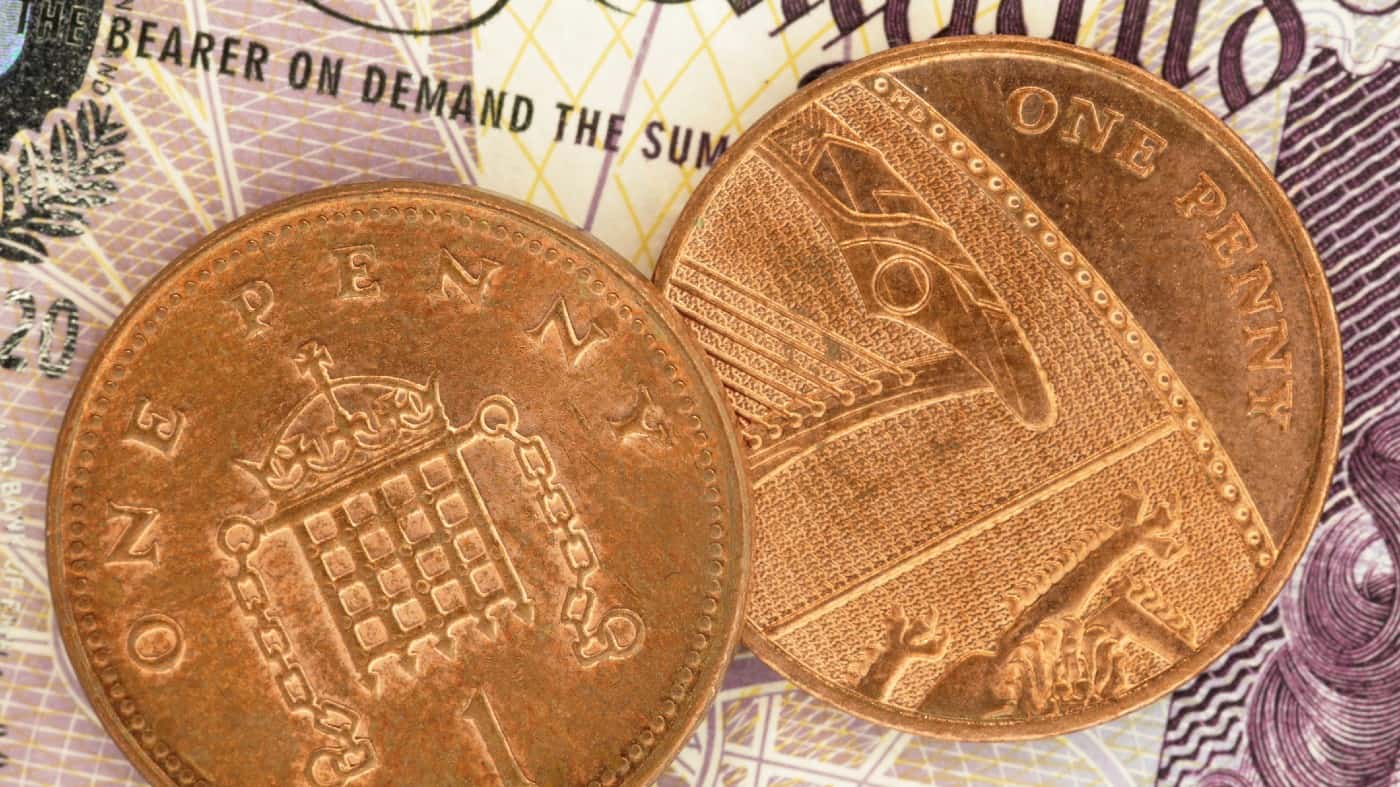
British Pennies on a Pound Note

Image source: Getty Images

You’re reading a free article with opinions that may differ from The Motley Fool’s Premium Investing Services. Become a Motley Fool member today to get instant access to our top analyst recommendations, in-depth research, investing resources, and more. Learn More.

It is easy to understand why people like the idea of buying a share for pennies and watching its value soar. But while some penny shares increase in value many times over, others lose all value.

I do own some penny shares, such as Topps Tiles (LSE: TPT) and Gresham House Income & Growth Venture Capital Trust.

XXX

But owning such shares has been a mixed bag and there are a few things I particularly look out for when considering them. Here are three.

1. Company has zero revenue

Penny shares are sometimes sold to raise money for a company that has not yet started making any revenues. A common example is a business with a mining license that needs funds to help develop the site and possibly move to commercial production.

This is not unique to penny shares. Some large tech companies also sell shares to investors at what they call a “pre-revenue” stage.

For me, a company with no revenue is not a business so much as an idea. Maybe in future it will generate sizeable revenues and profits. But before it starts making any sales, I think it is difficult if not impossible to judge its business model.

Contrast that to a company like Topps. Its statutory revenue jumped 16% year on year in the first half, to £143m. The company sells one in five tiles bought in the UK.

2. Weak liquidity

Liquidity refers to a company’s access to the funds it needs to keep running its business. That could include cash on hand, bank loans or other types of debt.

When the economy goes south and lenders start to tighten their lending criteria (or sometimes go bust themselves) it can be bad news for businesses with financing needs and weak liquidity.

Large industrial giants like Associated British Foods or Shell may find it harder to borrow on attractive terms in such moments – but I do not stay awake at night worrying that their liquidity will dry up overnight.

That can be a real risk for penny shares, though, as many have limited funds on their balance sheet. Lenders may be more wary of advancing money to a business with limited revenues or profits.

That is one reason I explored Topps’ balance sheet before investing in it. A decline from £8.7m of adjusted net cash at the end of its last financial year to £1.2m of adjusted net debt at the half-year point was thus a concern to me.

The board noted, though, that it reckons Topps has sufficient available liquidity to continue to meet all its financial obligations as they fall due for the foreseeable future. I will be keeping a close eye on the company’s balance sheet.

3. No sizeable shareholders

With a big company like Alphabet I do not bother looking into who else owns shares. With its $2.3trn market capitalisation, I am confident that there are multiple shareholders with big enough stakes to pay close attention to how the company is being run.

This is sometimes known as “monitoring” and can be a problem with penny shares. A small market capitalisation can mean no large shareholder has a big enough financial incentive to monitor management closely.

That could happen at any business, but it is far more likely in small ones with fragmented shareholdings than very large companies.


C Ruane has positions in Alphabet, Gresham House Income & Growth Vct Plc, and Topps Tiles Plc. The Motley Fool UK has recommended Alphabet and Associated British Foods Plc. Views expressed on the companies mentioned in this article are those of the writer and therefore may differ from the official recommendations we make in our subscription services such as Share Advisor, Hidden Winners and Pro. Here at The Motley Fool we believe that considering a diverse range of insights makes us better investors.

More on Investing Articles

Friends and sisters exploring the outdoors together in Cornwall. They are standing with their arms around each other at the coast.
Investing Articles

£503 buys 14 shares in this FTSE 250 stock that returned 23.9% annually for the last 15 years

This FTSE 250 stock has averaged a huge return for 15 years. At today's price, £503 buys 14 shares. But…

Read more »

Black woman using loudspeaker to be heard
Investing Articles

£1,000 buys 25 shares in this FTSE 100 stock that’s returned 29.2% annually for the last 10 years

This FTSE 100 mining stock has returned close to 30% a year for a decade. At 3,995p, £1,000 buys 25…

Read more »

Female student sitting at the steps and using laptop
Investing Articles

Down 47%, is this growth stock finally worth buying in May?

With a £288m order book and a hidden pipeline of defence and nuclear contracts, is this growth stock now too…

Read more »

House models and one with REIT - standing for real estate investment trust - written on it.
Investing Articles

2 REITs yielding 7%+ to consider for passive income in 2026

A REIT backed by the NHS and another backed by Tesco and Sainsbury's with both yielding 7%+. Here's why I'm…

Read more »

Woman riding her old fashioned bicycle along the Beach Esplanade at Aberdeen, Scotland.
Investing Articles

Just 97 shares of this UK dividend stock generate £238 in passive income

A 5.7% yield, £238 in passive income from just 97 shares, and one of the most divisive dividend stocks on…

Read more »

ISA coins
Investing Articles

£10,000 in an ISA generates a second income of…

The London Stock Exchange is home to some of the world's most generous dividends. But how big a second income…

Read more »

Shot of a senior man drinking coffee and looking thoughtfully out of a window
Investing Articles

Expert recommendations: 2 top income stocks yielding 7%+!

With yields of 7.2% and 7.8% respectively, these two income stocks are catching the eyes of institutional analysts. Should investors…

Read more »

Illustration of flames over a black background
Investing Articles

3 top income-focused stocks to buy in May 2026, according to experts

Looking for a stock to buy for income in May 2026? Experts have flagged these three UK dividend shares as…

Read more »





