

We have some exciting news to share! The Motley Fool UK has now become The Twelfth Magpie -- an independent, UK-owned company, led by our long-serving UK management team — Mark Rogers, Chris Nials and Heather Adlington. In practical terms, it’s the same team you know, now fully focused on serving our UK readers and members.

Just as importantly, our approach remains unchanged: long-term, jargon-free, and on your side. This site is our new home, and there will be extra tweaks made across the coming few days as we settle in. So if anything looks a little off, please bear with us!

The content of this article was relevant at the time of publishing. Circumstances change continuously and caution should therefore be exercised when relying upon any content contained within this article.

Could getting out of the food business help the Unilever share price?

Unilever and McCormick today announced a transformational corporate deal. Our writer weighs some of its attractions and risks.

| More on:
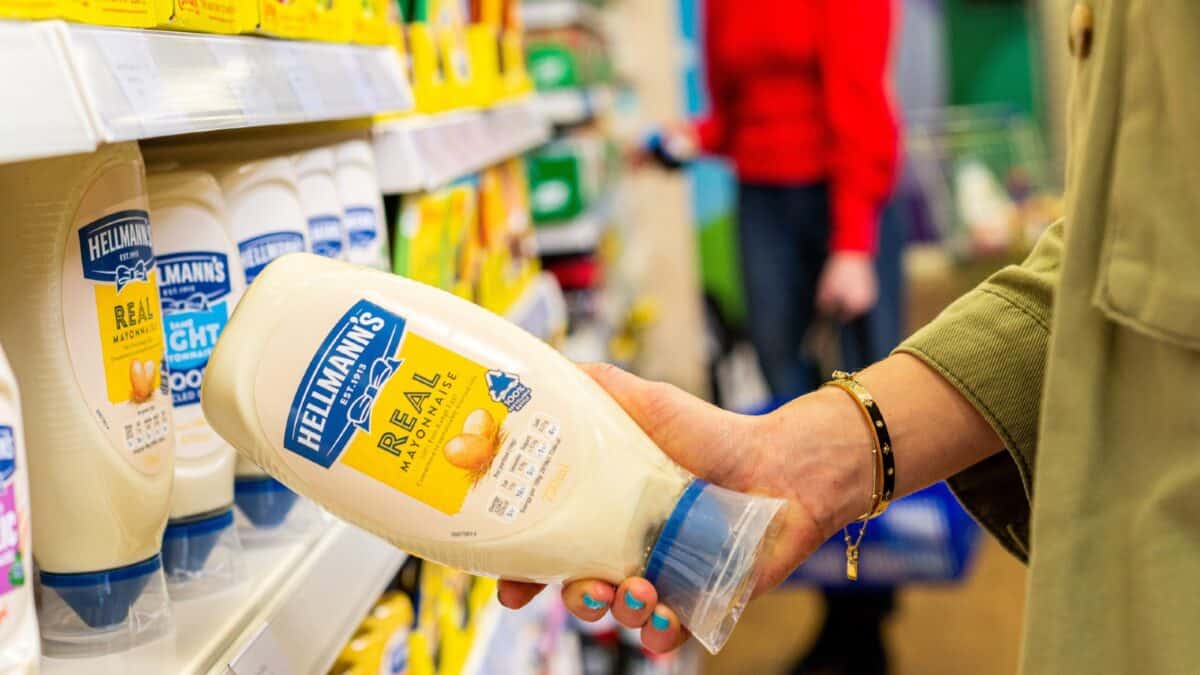
Lady taking a bottle of Hellmann's Real Mayonnaise from a supermarket shelf

Image source: Unilever plc

You’re reading a free article with opinions that may differ from The Motley Fool’s Premium Investing Services. Become a Motley Fool member today to get instant access to our top analyst recommendations, in-depth research, investing resources, and more. Learn More.

Consumer goods giant Unilever (LSE: ULVR) today (31 March) announced that it is in “advanced discussions” with Schwartz owner McCormick about “a potential strategic transaction involving elements of its Foods business”. It then announced shortly afterwards that it has agreed to combine its entire foods business with McCormick. That was quick!

What might that mean for the Unilever share price down the road?

XXX

There is a strategic logic here

Personally I will be sad to see Unilever get rid of its food business.

After all, the firm itself is a combination of the Lever brothers’ detergent business, associated with the iconic Port Sunlight model village on the Wirral, and Dutch margarine maker Unie close to a century ago.

Unilever got out of the margarine business in 2017 but its food division remains a nod to its corporate heritage.

It is also a large part of the company today. Last year it delivered €13bn of revenue, just over a quarter of the FTSE 100 firm’s total revenue.

But it had the slowest revenue growth of Unilever’s four operating divisions.

Other large consumer goods companies have streamlined their portfolios to focus on higher growth potential businesses in recent years.

Unilever took a similar move last year when it spun off the Magnum Ice Cream Company. There is a logic to further reducing its footprint in the food business.

Could a transaction create value for shareholders?

That logic is debatable, though.

Going back to the original merger between Unie and Lever Brothers, the idea was that scale could help. For example, it would give the combined business more heft when negotiating with retailers.

I think that remains true today, even though Unilever would still be a substantially sized business even if it gets out of foods altogether.

Rivals have exited some businesses to focus on what is often described as the higher margin beauty business. That logic may seem to apply to Unilever, owning as it does brands like Dove.

Personally, though, I am not convinced by that. Last year, the food business and personal care business had the same underlying operating margin. Both the beauty and wellbeing and personal care businesses had markedly lower underlying operating margins.

The dust is still settling

Given its strong brand stable, I could see Unilever attracting potentially attracting other, unsolicited, bids for its food division.

The company’s smaller size after the transaction may make it more vulnerable to a takeover bid itself, I reckon.

The $16bn it is set to get in cash from the transaction will help its balance sheet and could fund strategic acquisitions.

Unilever will also own almost 10% of the new firm, so it will be in the foods business as a shareholder. Unilever shareholders will get the majority of the new firm.

That deal structure means the transaction may not affect the Unilever share price much in the short term. It seems to me that Unilever is getting a fair price.

At 19 times earnings, the company’s share price is not particularly attractive to me, so I have no plans to invest.


C Ruane has no position in any of the shares mentioned. The Motley Fool UK has recommended Unilever. Views expressed on the companies mentioned in this article are those of the writer and therefore may differ from the official recommendations we make in our subscription services such as Share Advisor, Hidden Winners and Pro. Here at The Motley Fool we believe that considering a diverse range of insights makes us better investors.

More on Investing Articles

Friends and sisters exploring the outdoors together in Cornwall. They are standing with their arms around each other at the coast.
Investing Articles

£503 buys 14 shares in this FTSE 250 stock that returned 23.9% annually for the last 15 years

This FTSE 250 stock has averaged a huge return for 15 years. At today's price, £503 buys 14 shares. But…

Read more »

Black woman using loudspeaker to be heard
Investing Articles

£1,000 buys 25 shares in this FTSE 100 stock that’s returned 29.2% annually for the last 10 years

This FTSE 100 mining stock has returned close to 30% a year for a decade. At 3,995p, £1,000 buys 25…

Read more »

Female student sitting at the steps and using laptop
Investing Articles

Down 47%, is this growth stock finally worth buying in May?

With a £288m order book and a hidden pipeline of defence and nuclear contracts, is this growth stock now too…

Read more »

House models and one with REIT - standing for real estate investment trust - written on it.
Investing Articles

2 REITs yielding 7%+ to consider for passive income in 2026

A REIT backed by the NHS and another backed by Tesco and Sainsbury's with both yielding 7%+. Here's why I'm…

Read more »

Woman riding her old fashioned bicycle along the Beach Esplanade at Aberdeen, Scotland.
Investing Articles

Just 97 shares of this UK dividend stock generate £238 in passive income

A 5.7% yield, £238 in passive income from just 97 shares, and one of the most divisive dividend stocks on…

Read more »

ISA coins
Investing Articles

£10,000 in an ISA generates a second income of…

The London Stock Exchange is home to some of the world's most generous dividends. But how big a second income…

Read more »

Shot of a senior man drinking coffee and looking thoughtfully out of a window
Investing Articles

Expert recommendations: 2 top income stocks yielding 7%+!

With yields of 7.2% and 7.8% respectively, these two income stocks are catching the eyes of institutional analysts. Should investors…

Read more »

Illustration of flames over a black background
Investing Articles

3 top income-focused stocks to buy in May 2026, according to experts

Looking for a stock to buy for income in May 2026? Experts have flagged these three UK dividend shares as…

Read more »





